
Product Description
CO2 Compressor with Quick Delivery Stock
Introduction Oxygen Compressor
CO2 Compressor refers to the compressor used to pressurize oxygen and achieve delivery.
Oxygen is a violent accelerant, prone to combustion and explosion.
Attention should be paid to the design and use of CO2 Compressor:
| (1) | Compressed gas parts are strictly forbidden to contact with oil, the cylinder is not lubricated with water and glycerin or oil-free lubrication, and the oil is not stained when maintenance and the solvent must be cleaned and dried before assembly. |
| (2) | Because of the high humidity during water lubrication and the rising temperature during compression, the oxygen from the wet gas holder is corrosive, so the material in contact with oxygen should be corrosion-resistant, and requires good heat and electrical conductivity. The cylinder is generally made of phosphor bronze, the piston is made of aluminum alloy, and the intercooler is made of copper tube or stainless steel tube. |
| (3) | The average speed of the piston should be low, and the gas velocity in the pipeline should also be lower than that in the air compressor. |
| (4) | The exhaust temperature should not be too high, not higher than 100~120ºC when lubricated with water, and not higher than 160ºC when filled with oil-free lubrication structure. The pressure ratio at each level should not be too high. |
Product Specification
| No. | Item | Data |
| 1 | Working medium | Oxygen |
| 2 | Model | GOW-30/4-200 |
| 3 | Structure | oil free reciprocating |
| 4 | Pressure stage | 4 stage |
| 5 | Capacity | 30Nm3 |
| 6 | Inlet pressure | 3~4bar |
| 7 | Outlet pressure | 200bar |
| 8 | Cooling way | Water / Air |
| 9 | Motor power | 13.5kw |
| 10 | Motor power | Overload, stop automatic |
| 11 | External dimension | 1650*950*1470mm |
| 12 | Weight | 960kg |
Advantage Oxygen Compressor
Cape-Golden’s CO2 Compressor is the preferred machine for pollution-free sealed oxygen compression. Our CO2 Compressor is with high quality and reliable performance, reducing maintenance costs and extending service interval cycles. CZPT customers have reported up to 40,000 hours of use without having to replace any parts.
To compress oxygen, fluorine, and other highly reactive gases, CZPT follows rigorous cleaning procedures in a clean, dust-free environment.
We offer many different types of CO2 Compressor, ranging from basic machine to turnkey engineering, slide mounting and computer control systems.
With our extensive experience in compressor technology and our state-of-the-art engineering and manufacturing capabilities, we work closely with our customers to provide them with the best solutions for their oxygen compression needs.
Typical Applications
Typical applications of CO2 Compressor include but are not limited to the following:
1. Fill and unload oxygen from long tube trailer
2. Cylinder filled compressors with oxygen and bulk storage tanks
3. Used for oxygen stirring, recovery and mixing
4. Oxygen used for cutting and welding metal
5. Oxygen feedstock for chemical, petrochemical and pharmaceutical industries
6. Oxygen used in glass manufacturing and pulp and paper industry
7. Oxygen used in metal refining and oxidation processes in the chemical industry
8. Oxygen is supercharged and stored by high pressure compression
9. Oxygen for diving and medical care services
Choosing the Right Air Compressor For Your Home
You will find that air compressors are indispensable tools for a variety of situations, including garages, home workshops, and basements. These tools can power a variety of tools, and each model is sized to suit the job at hand. Because air compressors have only 1 motor, they are lightweight, compact, and easy to handle. Using 1 air compressor to power several tools will also reduce the wear and tear on individual components. This article will introduce some important characteristics to look for when choosing the right air compressor for your home.
Positive displacement
A positive displacement compressor applies pressure to a fluid, whereas a centrifugal 1 does the opposite. A positive displacement compressor creates the desired pressure by trapping air and increasing its volume. Its discharge valve releases the high-pressure gas. These compressors are used in industrial applications and nuclear power plants. The difference between a positive and negative displacement compressor is that a positive displacement compressor can compress and release air at a consistent rate.
A positive displacement air compressor uses a reciprocating piston to compress air. This reduces the volume of the air in the compression chamber, and a discharge valve opens when the pressure reaches the desired level. These compressors are used in bicycle pumps and other pneumatic tools. Positive displacement air compressors have multiple inlet ports and have several configurations. Positive displacement air compressors have a single-acting and double-acting piston, and can be oil-lubricated or oil-free.
A positive displacement air compressor is different from a dynamic compressor. It draws air into the compression chambers and then releases the pressure when the valve is opened. Positive displacement compressors are common in industrial applications and are available in single-acting, double-acting, and oil-lubricated models. Large piston compressors have ventilated intermediate pieces and crossheads on gudgeon pins. Smaller models have permanently sealed crankcases with bearings.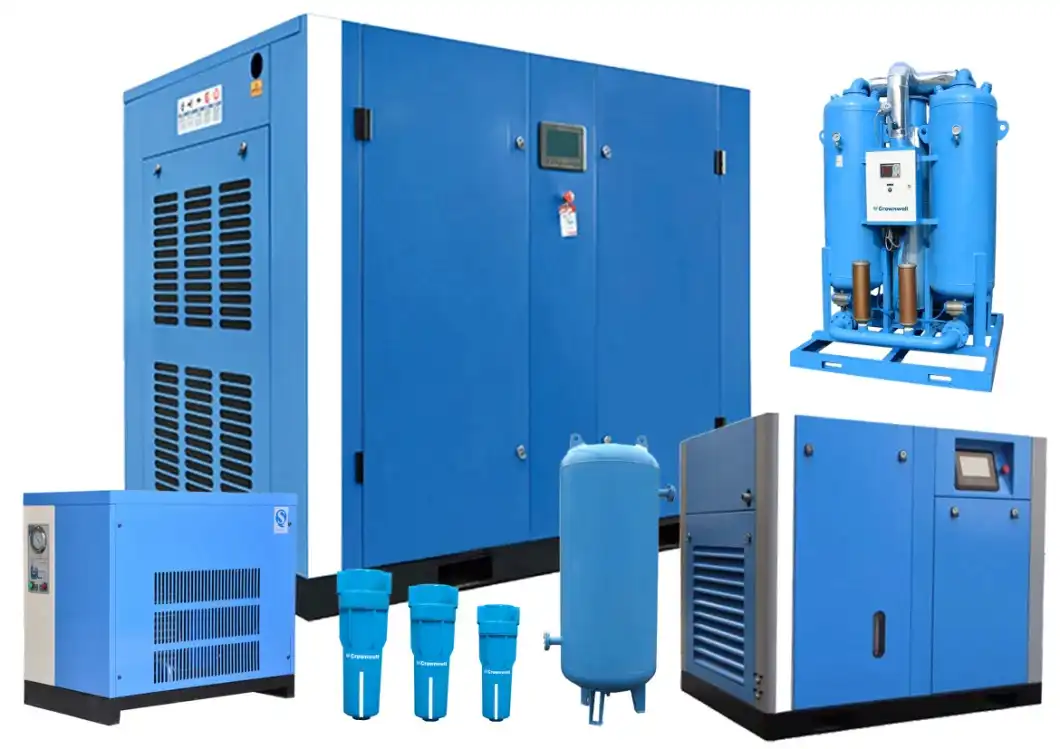
Oil-free
Oil-free air compressors have some advantages over their oil-lubricated counterparts. They do not require lubrication oil because they are coated with Teflon. The material has 1 of the lowest coefficients of friction and is layered, so it slides past other layers with little effort. Because of this, oil-free compressors tend to be cheaper and still deliver comparable performance. Oil-free compressors are a good choice for industrial applications.
The life of an oil-free air compressor is significantly longer than an oil-lubricated counterpart. These models can operate up to 2,000 hours, 4 times longer than the average oil-lubed compressor. Oil-free compressors also have a significantly lower operating noise than their oil-lubricated counterparts. And because they don’t need oil changes, they are quieter. Some even last up to 2,000 hours.
An oil-free air compressor is a good choice if your application requires high levels of purity. Several applications require ultra-pure air, and even a drop of oil can cause product spoilage or damage to production equipment. In addition to the health risks, an oil-free air compressor reduces the costs associated with oil contamination and minimizes leaks. It also eliminates the need for oil collection, disposal, and treatment.
A typical oil-free air compressor is very efficient, requiring only about 18% of the full load horsepower. However, oil-free compressors have a higher risk of premature failure and are not recommended for large-scale industrial applications. They may also use up to 18% of the compressor’s full capacity. They may sound appealing, but you must make sure you understand the benefits of an oil-free air compressor before choosing 1 for your industrial applications.
Single-stage
A single-stage air compressor is designed to provide the power for a single pneumatic tool or device. These machines are generally smaller than two-stage compressors and produce less heat and energy. These machines aren’t designed for heavy-duty industries, but they are still highly effective for a variety of applications, including auto shops, gas stations, and various manufacturing plants. They can also be used in borewells, as they are suitable for small spaces with low air flow requirements.
A single-stage air compressor has 1 cylinder and 2 valves – the inlet and the delivery valves. Both of these valves function mechanically, with the inlet valve controlling torque and the delivery 1 controlling air pressure. Generally, single-stage compressors are powered by a gas engine, but there are also electric models available. The single-stage air compressor is the most common type of air compressor. It has a single cylinder, 1 piston, and 1 air cylinder.
The single-stage air compressors are used for small projects or personal use. A two-stage air compressor is more effective for industrial projects. Its longer air end life makes it more efficient. It is also more efficient for use in the automotive industry, where the engine has many cylinders. In general, single-stage compressors require a higher power level. The single-stage model is ideal for small projects, while a two-stage 1 is suitable for larger-scale arsenals.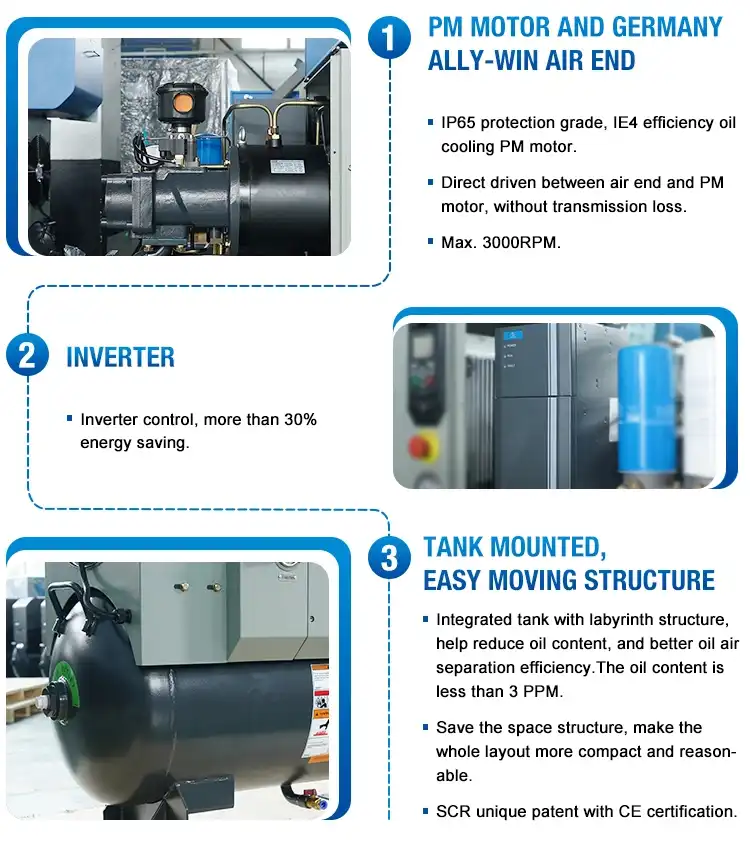
CFM
The cubic foot-per-minute (CFM) of an air compressor is the output of the machine. In order to calculate the CFM level, start by looking at the compressor’s specifications. You should know how many cubic feet the unit can hold and how many pounds per square inch it can compress. Once you have these information, you can calculate the CFM. Now you can use these numbers to select an appropriate air compressor for your needs.
The most common way to increase the CFM of an air compressor is to turn the regulator down. By turning the dial down, the air compressor will produce more than 10 CFM. You can also try connecting 2 output valves. Make sure that the settings are adjusted properly before you begin. This will ensure that your air compressor is functioning at its maximum efficiency and lifespan. To increase the CFM of your air compressor, first check that your regulator is calibrated for the desired pressure level.
To calculate the CFM of an air compressor, first determine the tank volume of the machine. Then, multiply this volume by the time it takes to fill the tank. Then, divide the result by 60 seconds to calculate the CFM. Once you know how much air your machine can hold, you can choose a suitable air compressor. If you’re working in a confined area, you should buy a tool with a large tank.
PSI
The PSI of an air compressor is the pressure that it can output. A typical air compressor has a gauge connected to the airline at the bottom, next to it, or between the two. The gauge tells the actual pressure of the air compressor, while the cut-out pressure is determined by the manufacturer. The manufacturer recommends that you set the cut-out pressure 20 to 40 PSI higher than the factory recommended pressure. If you want to set the pressure for your nail gun, you can use the cut-in and cut-out pressures on your compressor, and the tank won’t exceed this range.
The PSI of an air compressor measures the force that it can deliver, which is often in pounds per square inch. For most air tools, you need at least 40 to 90 psi. In general, reciprocating air compressors work on an on/off basis. This relationship is known as the duty cycle. All air compressors are rated for a particular duty cycle, such as 50 percent on and 20-5 percent off.
The Psig of an air compressor is not free, as many people believe. The PSI of an air compressor is not free, but it is essential to maintain it for safe operations. If you’re having trouble maintaining a consistent pressure, consider turning down the PSI of your compressor by 2 psig. This will determine the critical pressure for the machine. You’ll also increase the amount of energy in the system by 1 percent.
Power source
The power source for an air compressor is crucial in its operation. Without the correct voltage and amperage, air compressors will not function properly. The power source must be close to the compressor so that it can plug into an electrical outlet. If it is too far from the outlet, the compressor may not be able to build enough pressure. When this happens, the fuse inside the air compressor will turn off to protect the user. The power source should be a safe distance from the compressor.
Most manufacturers do not specify the power source for an air compressor. Depending on the horsepower, the compressor will require approximately 4 amps of power. A one-horsepower compressor would draw about 12 amps. If it were powered by a typical 120-volt household supply, its motor would exceed the 15-amp breaker capacity. A larger air compressor, however, will require a separate 15-amp power source, making it impossible to use it with this type of power source.
The power source for an air compressor is typically electrical alternating current (AC) that is equivalent to the voltage on a standard wall outlet. A three-phase air compressor, on the other hand, requires a special AC supply with 3 electrical offset pulses. Regardless of the type of air compressor, the power source must be compatible with the incoming power service. One of the most common problems when attempting to connect an air compressor to an AC power source is undersized wire. This results in low voltage and high amperes, tripping of over-load relays and blown fuses.

